

 Grains & Pulses
 Organic Produce
 Spices & Condiments
 Fresh Herbs

 Fresh Fruits
 Fresh Vegetables
 Exotic Produce
 Seasonal Specials

 Groundnut Seeds
 Mustard Seeds
 Sesame Seeds
 Sunflower Seeds

 Fresh Fish
 Frozen Fish
 Crab & Lobster
 Prawns & Shrimps

 Bath & Body
 Skincare
 Haircare
 Oral Care

 Flavored Honey
 Honey Syrups
 Organic Honey
 Raw Honey

 Cornflakes
 Millet Mixes
 Oats & Muesli
 Granola

 Mini Tractors
 Harvesting Tools
 Power Tillers
 Sprayers & Pumps

 Chemical Fertilizers
 Pesticides
 Organic Fertilizers
 Herbicides

 Farm Tools
 Irrigation Equipment
 Threshers

 Packaging Machines
 Cold Storage Units
 Food Processing Machines
 Grinding & Milling Machines

 Baby Food
 Baby Skincare
 Diapers & Wipes
 Toys & Accessories

 Cattle Feed
 Fish Feed
 Pet Food
 Poultry Feed

 Frozen Chicken
 Ham & Bacon
 Meat Snacks
 Sausages

 Bakery Products
 Beverages (Juices, Soft Drinks)
 Packaged Snacks
 Ready-to-Eat Foods

 Biofuels
 Energy Storage Batteries
 Solar Panels
 Wind Energy Equipment


Glory Casino: Online Kazino Oynamaq Bonuslari Sizin Üçün!

Contents

Glory Casino: Mükəyyənləriniz üçün ən yaxşı online kazino bonusları
Glory Casino – Mükəyyənləriniz üçün ən yaxşı online kazino bonusları! Qonaqlandığınız halda, biz sizinlə çox müşahidə olsak istəyirik. Azerbaycan ülkəsinin istifadəçiləri üçün təşəkkürlerimiz edirik ki, siz Glory Casino səhifəsinə keçid edib. Biz sizin üçün dövranışınızı qadağandan keyif almaq üçün hazırladıq:
1. 500 AZN bonus sizin ilk cəziriniz üçün.
2. 100% bonus sizin ikinci cəziriniz üçün.
3. Həftənin hər günü yeni promosyalar.
4. Çoxlu bonuslar vip müştərilər üçün.
5. Ən yaxşı slotlar və onların bonusları.
6. Mobil kazino: bonuslar və oyunlar.
7. Qul oyunlar üçün çox yaxşı bonuslar.
8. Çoxlu para ödəniş seçenimləri.
Glory Casino sizin için daha çox keyif vermək istəyir!

Export & Import Trends in Australia: Opportunities for RTOs in 2026
Introduction
Export Import Trendsindustry is experiencing significant changes in 2026, creating new opportunities for businesses, logistics professionals, supply chain operators and Registered Training Organisations (RTOs). As global markets continue to evolve, Australian exporters and importers are adapting to changing customer demands, international trade agreements, technological advancements and supply chain challenges.
Understanding the latest Export Import Trends is essential for businesses looking to remain competitive in Australia’s international trade market. From mining and agricultural exports to manufactured goods, fuel, machinery and consumer products, international trade continues to play a major role in supporting Australia’s economy.
The demand for skilled workers in logistics, freight management, warehousing, customs documentation and supply chain operations is also creating opportunities for vocational education and training providers.
For Australian RTOs, these developments represent an opportunity to deliver industry-relevant training programs that prepare learners for future employment. By aligning training with industry requirements, RTOs can help develop a workforce capable of supporting Australia’s growing international trade and logistics sectors.
This article explores Australia’s export and import industry in 2026, major trade developments, emerging logistics skills, supply chain opportunities and practical strategies RTOs can use to prepare learners for future industry demands.
1. Overview of Australia’s Export and Import Industry in 2026
network supported by its natural resourcesExport Import Trends, agricultural industries, manufacturing sector and service-based economy.
International trade connects Australian producers with overseas customers while allowing businesses and consumers to access products from international markets.
According to the Australian Bureau of Statistics (ABS), Australia’s total exports of goods and services reached approximately $665.2 billion in 2025, representing an increase of 3.1% compared with the previous year. Imports increased by 6.9% to approximately $658.3 billion. Australia recorded a trade surplus of $6.9 billion for the year.
These figures provide an important baseline for understanding the market entering 2026. Australian Bureau of Statistics
The latest available monthly goods trade figures also demonstrate ongoing activity. In September 2026, seasonally adjusted goods exports reached $48.434 billion, while imports were $45.609 billion. This resulted in a monthly goods trade surplus of $2.826 billion. Australian Bureau of Statistics
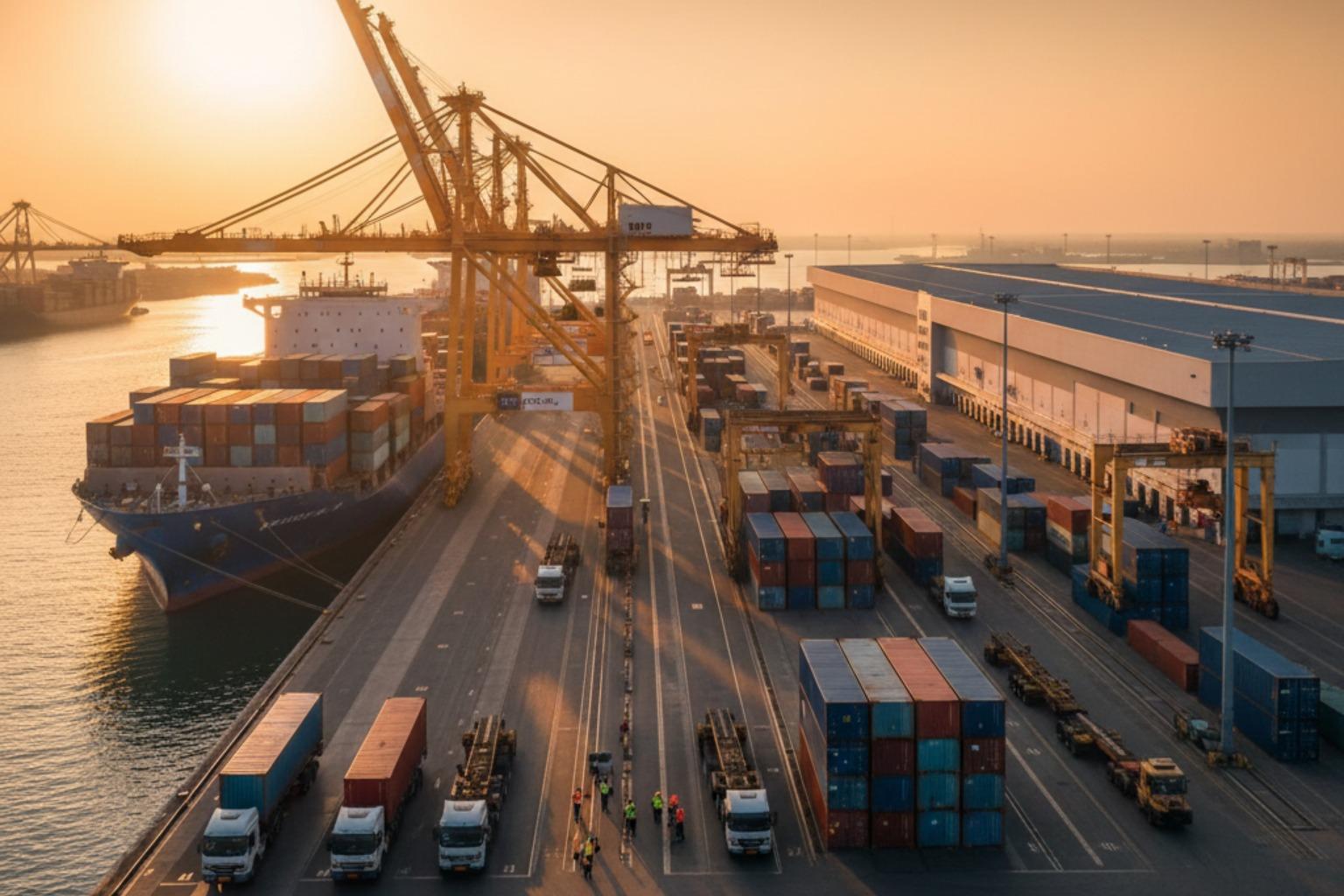
Several factors are influencing Australia’s international trade environment:
- Increasing demand for minerals and energy resources.
- Greater participation in Asian and international markets.
- Changes in global shipping and freight costs.
- Growth in technology-driven logistics operations.
- Increasing importance of supply chain resilience.
- Greater attention to environmental sustainability.
- Demand for skilled workers across transport and logistics.
These developments are influencing how businesses manage international shipments, warehouse operations, customs procedures and distribution networks.
For RTOs, understanding these industry changes is important when developing training programs that reflect real workplace requirements.
2. Major Export Import Trends in Australia
Australia’s trade activities are influenced by international demand, commodity prices, supply chain conditions and changing business relationships.
The following trends are particularly important for 2026.
2.1 Strong Demand for Australia’s Natural Resources
Natural resources remain an important part of Australia’s export industry.
Australia exports significant quantities of iron ore, coal, natural gas, gold, copper and other mineral resources to international markets.
China, Japan, South Korea and other Asian economies remain important destinations for Australian exports.
According to the ABS, China was Australia’s largest merchandise trade and services export partner in 2025, with exports worth approximately $195.6 billion. Japan accounted for $65.1 billion, while the United States accounted for $59.9 billion. Australian Bureau of Statistics
The resources sector also creates demand for specialist logistics services.
Businesses need skilled employees who understand:
- Bulk cargo handling.
- Freight documentation.
- Inventory management.
- Warehouse coordination.
- Transport scheduling.
- Export preparation.
- Workplace health and safety.
RTOs can support this demand by offering relevant transport, logistics and supply chain qualifications.
2.2 Growth in Agricultural Exports
Agriculture is another important contributor to Australia’s international trade.
Australian businesses export products such as beef, wheat, dairy products, barley, fruit, wine and other agricultural commodities.
International customers value Australian agricultural products because of their quality, production systems and established export markets.
However, agricultural exports require specialised logistics and supply chain management.
Products may need temperature-controlled storage, refrigerated transport, appropriate packaging and careful handling throughout the delivery process.
Exporters must also understand relevant food safety, biosecurity and export documentation requirements.
This creates opportunities for workers with skills in cold-chain logistics, inventory control, freight coordination and quality management.
RTOs can introduce practical learning activities that demonstrate how agricultural goods move from farms and processing facilities to international customers.
2.3 Increasing Importance of International Service Exports
Australia’s international trade industry is not limited to physical products.
Services such as education, tourism, professional services, financial services and technology-related activities also contribute to international trade.
In 2025, Australia’s services exports increased by 11% to approximately $142.1 billion.
Travel services generated approximately $86 billion, while transport services contributed $8.7 billion. Australian Bureau of Statistics
This demonstrates the importance of service industries in Australia’s broader international trading economy.
For RTOs, this also creates opportunities to provide training in customer service, international business operations, administration, transport coordination and professional communication.
2.4 Changing Import Requirements
Australia relies on international suppliers for a wide range of products, including machinery, vehicles, electronics, fuel, pharmaceutical products, building materials and industrial equipment.
China and the United States were Australia’s two largest import partners in 2025.
Imports from China reached approximately $130.2 billion, while imports from the United States reached approximately $98.6 billion. Japan, Singapore and Thailand were also among Australia’s major import partners. Australian Bureau of Statistics
Businesses importing international products must manage several responsibilities, including:
- Supplier communication.
- Shipping arrangements.
- Import documentation.
- Customs clearance.
- Product classification.
- Biosecurity requirements.
- Warehouse receiving.
- Inventory management.
Import procedures can become complicated when documentation is incomplete or regulatory requirements are misunderstood.
Employees with practical import and supply chain knowledge help businesses reduce delays and improve operational efficiency.
3. Australia’s Major Trading Partners and Trade Developments
International partnerships are essential to Australia’s export and import industry.
Australia maintains trade relationships with countries across Asia, Europe, North America and the Pacific.
3.1 China
China remains Australia’s largest trading partner and an important market for Australian minerals, agricultural products and other exports.
Australian businesses also import machinery, electronics, manufactured products and consumer goods from China.
The strength of this relationship creates ongoing demand for international freight management, shipping coordination and trade documentation skills.
3.2 Japan and South Korea
Japan and South Korea are important destinations for Australian energy resources, minerals, agricultural products and other commodities.
These markets require efficient freight arrangements and reliable export processes.
Businesses working with these countries need employees who understand international shipping schedules, cargo handling and commercial documentation.
3.3 India
India represents an important market for Australian agricultural products, education services, resources and other business activities.
The Australia-India Economic Cooperation and Trade Agreement (ECTA), which entered into force in December 2022, provides a framework for improved trade and market access.
Australia is also considering further trade cooperation with India through negotiations towards a more comprehensive agreement.
3.4 United Arab Emirates and Other Emerging Markets
Australia’s trade relationships are also expanding through agreements with additional international markets.
The Australia-United Arab Emirates Comprehensive Economic Partnership Agreement entered into force on 1 October 2025.
Other important regional arrangements include the Comprehensive and Progressive Agreement for Trans-Pacific Partnership (CPTPP) and the Regional Comprehensive Economic Partnership (RCEP). dfat.gov.au
These agreements can create opportunities for Australian businesses through improved market access and reduced trade barriers, subject to the specific agreement’s rules.
RTOs should help learners understand how trade agreements, country-of-origin rules, tariff preferences and commercial documentation influence international business operations.
4. Emerging Logistics and Supply Chain Skills in Australia
One of the most important consequences of changing trade conditions is the increasing need for skilled logistics and supply chain workers.
Transport and logistics operations involve moving, storing, managing and distributing goods across domestic and international markets.
According to Jobs and Skills Australia’s industry profile, approximately 754,500 people were employed in the Transport, Postal and Warehousing industry in February 2026.
Employment in the industry increased by approximately 2.1% over the previous year. Road freight transport was the largest identified sector, employing around 201,400 workers. Jobs and Skills Australia
As the industry changes, employers increasingly need workers with technical knowledge and practical workplace capabilities.
4.1 Digital Logistics and Technology Skills
Digital technology is changing how logistics businesses manage their operations.
Many organisations use digital systems to monitor inventory, track shipments, manage orders and coordinate deliveries.
Employees need to understand how to use relevant business software and digital platforms.
Important capabilities include:
- Warehouse Management Systems (WMS).
- Transport Management Systems (TMS).
- Digital inventory records.
- Electronic freight documentation.
- Shipment tracking.
- Data entry and reporting.
- Basic data analysis.
- Digital communication.
RTOs can introduce practical digital activities that simulate real workplace situations.
For example, learners can complete inventory updates, prepare shipment records and monitor a delivery through a simulated transport management system.
4.2 International Trade Documentation
Documentation is essential for successful export and import operations.
Employees must understand the documents and information required to move goods across international borders.
Depending on the shipment, common documents and records may include:
- Commercial invoices.
- Packing lists.
- Bills of lading.
- Air waybills.
- Certificates of origin.
- Customs declarations.
- Import and export permits.
- Relevant biosecurity documentation.
Errors in shipment documentation can create delays, additional costs and compliance problems.
Training should therefore focus on accuracy, document preparation, verification and understanding the purpose of each document.
4.3 Warehouse and Inventory Management
Warehousing is a fundamental component of the supply chain.
Warehouse employees are responsible for receiving goods, checking deliveries, maintaining inventory records, storing products and preparing orders.
As international trade becomes more complex, businesses need workers who understand efficient warehouse operations.
Relevant skills include stocktaking, inventory rotation, order picking, packing, dispatch coordination and workplace safety.
RTOs can develop practical assessments based on realistic warehouse scenarios.
4.4 Freight and Transport Coordination
Freight coordination involves planning and organising the movement of goods through road, rail, air and sea transport networks.
Employees need to understand delivery schedules, freight costs, cargo requirements and transport documentation.
They may also need to communicate with suppliers, customers, freight forwarders, warehouse teams and transport operators.
These communication and coordination skills are essential for maintaining reliable supply chain operations.
4.5 Compliance and Workplace Safety
Compliance is another important skill area.
Employees working in international trade and logistics need to understand relevant workplace procedures, transport requirements, customs processes and biosecurity obligations.
Workplace health and safety knowledge is also essential, particularly in warehouses, freight terminals, ports and transport environments.
Training should help learners recognise workplace hazards, follow safe operating procedures and understand their responsibilities.
5. Supply Chain Opportunities in Australia in 2026
Australia’s changing trade environment creates opportunities for businesses and workers across several supply chain sectors.
These opportunities also provide potential pathways for RTO training and workforce development.
5.1 Warehousing and Distribution
The growth of online retail, international imports and domestic distribution creates ongoing requirements for efficient warehousing.
Businesses need employees who can receive products, manage stock, prepare orders and coordinate deliveries.
RTOs can provide training in supply chain operations, warehouse procedures, inventory systems and distribution activities.
5.2 Freight Forwarding and Logistics Services
Freight forwarding businesses help exporters and importers arrange international shipments.
Their services can include cargo bookings, shipping coordination, documentation, customs-related processes and communication with transport providers.
People entering this field need a combination of commercial knowledge, digital skills and attention to detail.
Training in freight operations and international trade documentation can help learners develop relevant workplace capabilities.
5.3 Port and Maritime Logistics
Australian ports connect domestic producers and importers with international trading markets.
Port operations involve container handling, cargo movement, shipping coordination, terminal management and safety procedures.
Infrastructure Australia’s 2026 Infrastructure Priority List identifies both high-productivity freight networks and port capacity and connectivity as important national infrastructure priorities.
The organisation highlights the need to improve freight corridors, intermodal connections, port capacity and supply chain resilience. Infrastructure Australia
This creates opportunities to strengthen training related to port operations, stevedoring, freight administration and maritime logistics.
5.4 Rail and Road Freight Operations
Road and rail transport are essential for connecting Australian production areas, warehouses, ports and distribution centres.
Australia’s large geographical size makes freight planning and transport coordination particularly important.
The Australian Government’s 2026 budget also highlights the importance of freight resilience and greater use of rail and shipping to improve fuel efficiency and supply chain reliability. Budget 2026–27
RTOs can support this sector through training in transport operations, freight handling, driving operations, safety and logistics coordination.
5.5 Sustainable Supply Chain Operations
Sustainability is becoming an increasingly important consideration for Australian businesses.
Organisations are exploring ways to improve transport efficiency, reduce unnecessary freight movements, manage fuel consumption and lower their environmental impact.
Employees may need to understand efficient delivery planning, responsible resource use and sustainable warehouse practices.
RTOs can incorporate these concepts into existing logistics and supply chain training programs.
6. How RTOs Can Prepare Learners for Future Industry Demands
Registered Training Organisations play an important role in developing Australia’s skilled workforce.
As export and import activities evolve, RTOs need to ensure their training programs reflect current employer expectations.
The following strategies can help RTOs prepare learners for future opportunities.
6.1 Review Current Training Packages
RTOs should regularly review relevant qualifications, units of competency and training package requirements.
The Transport and Logistics Training Package (TLI) is particularly relevant for providers delivering logistics, supply chain, freight and transport-related training.
Importantly, the National Training Register lists TLI Release 17.0 as the current release, published on 16 October 2026.
The package includes relevant competencies such as:
- TLIA0001 – Complete import procedures.
- TLIA0002 – Prepare cargo for export.
- TLIA0003 – Complete and check import/export documentation.
- TLIA0004 – Complete receival and despatch documentation.
These units provide a useful foundation for developing practical import, export and logistics capabilities. RTOs should check the current National Training Register for applicable qualifications, releases and delivery requirements. TLI Transport and Logistics Training Package
6.2 Develop Practical Learning Activities
Employers generally need workers who can perform tasks confidently in real workplace environments.
Therefore, training should include practical activities rather than relying entirely on theoretical classroom instruction.
Examples include:
- Preparing an export shipment.
- Completing import documentation.
- Checking commercial invoices.
- Managing warehouse inventory.
- Planning freight deliveries.
- Receiving and dispatching goods.
- Identifying workplace hazards.
- Updating digital shipment records.
These activities can help learners understand the responsibilities associated with different logistics roles.
6.3 Build Digital Skills into Training
Digital technology is becoming central to modern logistics operations.
RTOs should introduce learners to relevant workplace technologies and processes.
Training activities may include digital inventory management, shipment tracking, electronic records, warehouse software and transport scheduling.
Learners should also develop basic data interpretation and problem-solving skills.
These capabilities can help them adapt to changing workplace technologies.
6.4 Strengthen Industry Partnerships
Industry partnerships help RTOs understand the actual skills employers need.
Training providers can work with freight companies, warehouse operators, importers, exporters, transport businesses and logistics associations.
These relationships can support:
- Industry consultation.
- Workplace visits.
- Practical training scenarios.
- Guest presentations.
- Work placements where available.
- Employer feedback.
- Training and assessment improvements.
Regular consultation can help RTOs identify emerging skill requirements before making significant changes to their programs.
6.5 Improve Trainer Knowledge and Industry Currency
Trainers and assessors need relevant knowledge of current industry practices.
RTOs should support professional development through industry engagement, updated learning resources, relevant professional activities and exposure to modern logistics systems.
Trainers should understand current import and export procedures, digital documentation, warehouse technologies and workplace safety expectations.
This helps ensure that learning activities remain relevant to industry requirements.
6.6 Focus on Employability and Communication Skills
Technical knowledge alone may not be sufficient for successful employment.
Logistics and international trade employees regularly communicate with customers, suppliers, managers and transport providers.
Important employability skills include:
- Written communication.
- Professional customer service.
- Teamwork.
- Critical thinking.
- Problem-solving.
- Time management.
- Organisation.
- Attention to detail.
RTOs should integrate these capabilities into vocational training and practical assessment activities.
6.7 Maintain Training Quality and Compliance
RTOs must also ensure their training and assessment practices meet the applicable regulatory requirements.
The 2025 Standards for Registered Training Organisations came into effect on 1 July 2025.
These standards place an increased focus on quality outcomes for learners, employers and the broader vocational education and training sector. Department of Employment and Workplace Relations
RTOs should regularly review training resources, assessment practices, trainer competency, industry relevance and learner support arrangements.
Maintaining these standards helps providers deliver quality education while responding to changing workforce needs.
7. Career Opportunities for Learners in Export, Import and Logistics
The changing Australian trade industry offers different career pathways for people interested in logistics and international business.
Relevant entry-level and developing career opportunities may include:
Warehouse Operations: Employees support receiving, storage, stock management, picking, packing and dispatch activities.
Supply Chain Operations: Workers assist with coordinating the flow of products between suppliers, manufacturers, warehouses and customers.
Import and Export Administration: Employees help prepare documentation, manage shipment records and communicate with relevant stakeholders.
Freight Coordination: Workers assist with organising deliveries, checking transport arrangements and tracking shipments.
Transport Operations: Employees support road, rail, maritime or other transport activities.
Inventory Management: Workers monitor stock levels, update records and support efficient product distribution.
Logistics Administration: Employees assist with operational records, customer communication, shipment schedules and general business administration.
RTOs can help learners explore these opportunities by providing industry-relevant training, practical assessments and information about different career pathways.
It is important to remember that individual job requirements vary. Some positions require additional licences, experience, specialist qualifications or regulatory approvals.
8. Challenges Facing Australia’s Export and Import Industry
Although international trade creates significant opportunities, businesses must also manage several challenges.
8.1 Global Supply Chain Disruptions
International events can affect shipping schedules, freight availability and delivery costs.
Businesses that depend on overseas suppliers may experience delays when shipping routes or production networks are disrupted.
Developing alternative suppliers and stronger supply chain planning can help businesses improve resilience.
8.2 Rising Freight and Fuel Costs
Fuel prices can influence road transport, aviation, shipping and distribution expenses.
The Australian Government’s 2026–27 Budget identifies fuel supply security and supply chain resilience as significant priorities, including measures to support essential freight movements. Budget 2026–27
Businesses need employees who understand freight efficiency, delivery planning and operational cost management.
8.3 Skills and Workforce Development
Technology, changing customer expectations and evolving operating systems require workers to develop new capabilities.
Industry Skills Australia identifies challenges across transport and logistics, including an ageing heavy-vehicle workforce, driver shortages and rising fuel prices. Industry Skills Australia
At the broader labour-market level, Jobs and Skills Australia’s 2026 Jobs and Skills Report notes that 27% of assessed occupations remained in shortage in 2026. This demonstrates why employers and training providers should continue monitoring workforce requirements. Jobs and Skills Australia
8.4 Regulatory and Documentation Requirements
Importers and exporters must follow relevant Australian and international trade requirements.
Incorrect documentation, product classification issues or failure to meet applicable biosecurity requirements can create delays and additional expenses.
Businesses therefore need employees with strong compliance awareness and attention to detail.
RTOs can help learners understand the importance of following procedures and maintaining accurate records.
9. Future Outlook: What Can We Expect Beyond 2026?
Australia’s export and import industry is likely to continue changing as international markets, technology and supply chain requirements evolve.
Several developments are particularly important for businesses and training providers.
Greater Digital Integration: Logistics businesses are likely to continue investing in digital systems that improve shipment visibility, inventory management and operational planning.
More Resilient Supply Chains: Businesses will place greater emphasis on supplier diversification, risk management and alternative freight arrangements.
Sustainable Freight Operations: Efficient transport, reduced fuel consumption and lower-emission freight solutions will remain important considerations.
Advanced Warehouse Operations: Automation, data systems and more integrated inventory processes will influence warehouse operations.
Continued Workforce Development: Workers will need opportunities to improve their technical capabilities, digital confidence and problem-solving skills.
Industry-Aligned Vocational Education: RTOs will remain important in developing practical workforce capabilities through nationally recognised training and employer engagement.
For training providers, the key priority should be preparing learners for the workplace requirements that employers are already experiencing while building their ability to adapt to future changes.
10. Why RTOs Should Focus on Export and Import Training in 2026
The changing international trade environment creates a strong reason for RTOs to review their existing training opportunities.
Learners need practical knowledge of how Australian businesses import goods, prepare export shipments and manage supply chain operations.
RTOs that understand these requirements can develop more relevant learning experiences.
A strong training approach should combine technical knowledge, practical demonstrations, workplace scenarios, digital capabilities and employability skills.
For example, an RTO could develop a simulated international shipment activity in which learners:
- Receive an order from an overseas customer.
- Identify the cargo and shipment requirements.
- Prepare relevant export documentation.
- Organise freight and transport arrangements.
- Complete shipment records.
- Monitor delivery progress.
- Identify and resolve documentation or delivery issues.
This type of activity gives learners an opportunity to apply their knowledge in a realistic business environment.
RTOs should also gather feedback from employers and review training products regularly to ensure that qualifications and assessments continue to meet applicable industry and regulatory requirements.
By connecting vocational education with actual industry practices, RTOs can help learners build confidence and develop skills that support employment opportunities.
Conclusion
Australia’s international trade industry continues to create opportunities for businesses, workers and vocational education providers in 2026.
The latest Export Import Trends highlight the importance of Australia’s natural resource exports, agricultural products, international trading partnerships, service exports and changing import requirements.
At the same time, logistics and supply chain operations are becoming increasingly dependent on digital technology, efficient freight management, accurate documentation and skilled employees.
For Australian RTOs, these developments create an opportunity to strengthen vocational training and prepare learners for emerging workplace demands.
By reviewing current training packages, developing practical assessments, strengthening industry partnerships and improving digital skills, RTOs can help prepare a capable workforce for Australia’s future export, import and logistics industries.
Ultimately, the success of Australia’s international trade sector will depend not only on market opportunities and infrastructure but also on the knowledge, capabilities and adaptability of its workforce.
RTOs have an important role in supporting this future by delivering quality, practical and industry-relevant vocational education.
Frequently Asked Questions (FAQs)
1. What are the major Export Import Trends in Australia in 2026?
Major trends include continued demand for natural resources, agricultural exports, growing international services trade, changing import requirements, digital logistics and stronger supply chain resilience.
2. What are Australia’s main export products?
Australia exports iron ore, coal, natural gas, gold, agricultural commodities, meat, wheat and other products to international markets.
3. Which countries are Australia’s major trading partners?
China, Japan, the United States, South Korea and India are among Australia’s major export partners. China, the United States, Japan, Singapore and Thailand are important import partners.
4. What logistics skills are important in Australia?
Important skills include freight coordination, warehouse operations, inventory management, digital documentation, shipment tracking, import and export procedures, workplace safety and communication.
5. How can RTOs prepare learners for the logistics industry?
RTOs can deliver industry-aligned training, practical assessments, digital learning activities, workplace scenarios and relevant vocational qualifications.
6. Which training package is relevant to Australian logistics training?
The Transport and Logistics Training Package (TLI) covers a range of transport, logistics, warehousing, freight and supply chain competencies. RTOs should refer to the current National Training Register for approved training products.
7. Why is supply chain management important for Australian businesses?
Supply chain management helps businesses coordinate purchasing, transportation, warehousing, inventory and product distribution. Effective management can improve efficiency, reduce delays and strengthen business resilience.
8. What career opportunities are available in Australia’s import and export industry?
Potential opportunities include warehouse operations, freight coordination, supply chain administration, import and export documentation, transport operations and inventory management.


