

 Grains & Pulses
 Organic Produce
 Spices & Condiments
 Fresh Herbs

 Fresh Fruits
 Fresh Vegetables
 Exotic Produce
 Seasonal Specials

 Groundnut Seeds
 Mustard Seeds
 Sesame Seeds
 Sunflower Seeds

 Fresh Fish
 Frozen Fish
 Crab & Lobster
 Prawns & Shrimps

 Bath & Body
 Skincare
 Haircare
 Oral Care

 Flavored Honey
 Honey Syrups
 Organic Honey
 Raw Honey

 Cornflakes
 Millet Mixes
 Oats & Muesli
 Granola

 Mini Tractors
 Harvesting Tools
 Power Tillers
 Sprayers & Pumps

 Chemical Fertilizers
 Pesticides
 Organic Fertilizers
 Herbicides

 Farm Tools
 Irrigation Equipment
 Threshers

 Packaging Machines
 Cold Storage Units
 Food Processing Machines
 Grinding & Milling Machines

 Baby Food
 Baby Skincare
 Diapers & Wipes
 Toys & Accessories

 Cattle Feed
 Fish Feed
 Pet Food
 Poultry Feed

 Frozen Chicken
 Ham & Bacon
 Meat Snacks
 Sausages

 Bakery Products
 Beverages (Juices, Soft Drinks)
 Packaged Snacks
 Ready-to-Eat Foods

 Biofuels
 Energy Storage Batteries
 Solar Panels
 Wind Energy Equipment


Australia India Trade 2026: Import & Export Opportunities
Tittle: Imports & Export Opportunities Australia–India Trade 2026
Description
Explore Australia–India trade in 2026: key imports, exports, ECTA benefits and sourcing opportunities for businesses in both countries.
Introduction
Australia–India trade in 2026 is supported by complementary economies, expanding business links and the Australia–India Economic Cooperation and Trade Agreement (ECTA). Australia supplies agricultural commodities, food, seafood, minerals, energy resources and specialist services. India supplies textiles, pharmaceuticals, chemicals, engineering goods and consumer products. For importers, exporters, wholesalers and manufacturers, this relationship offers opportunities to diversify suppliers and reach new customers.
The Australian Government reports that two-way trade in goods and services reached AUD $50.2 billion in 2025. Australian agricultural exports to India rose from AUD $1 billion in 2022 to AUD $2.3 billion in 2025, an increase of 139 per cent. This article reviews trade categories, ECTA, and practical steps for businesses considering the two markets. Product opportunities do not guarantee sales or preferential duty treatment; every buyer and seller should verify demand, tariffs and regulatory requirements before contracting.
1. Australia–India Trade: A 2026 Overview
Australia is a major supplier of agricultural products, resources and energy, while India has a large manufacturing base and demand across food, consumer goods, industrial inputs and services. This creates a two-way commercial relationship.
According to Australia’s Department of Foreign Affairs and Trade (DFAT), two-way goods and services trade reached AUD $50.2 billion in calendar year 2025. Australian goods exports to India, excluding coal, rose 68 per cent between 2022 and 2025, from AUD $6 billion to AUD $10.3 billion. Agricultural exports grew 139 per cent over the same period. DFAT also reports that Australian imports of goods from India, excluding refined petroleum, increased by 31 per cent.
India exports clothing, household linen, automotive and electrical parts, as well as pharmaceuticals, chemicals and agricultural products. When comparing statistics, check the reporting period and measurement basis: calendar-year figures, financial-year figures, merchandise trade and goods-and-services trade are not interchangeable.
2. Key Australian Export Opportunities in India
Agricultural Products, Grains and Pulses
Agriculture is a major area of Australia–India trade. Australian producers supply grains, oilseeds, pulses, nuts, fruit, vegetables and other agricultural products. Indian food processors, wholesalers, retailers and ingredient manufacturers may seek imported products that meet their quality and supply requirements.
ECTA outcomes identify Australian barley and oats as receiving duty-free access to India. Lentils have a preferential tariff arrangement within a specified quota. Other products covered by tariff elimination or reduction schedules include selected nuts, fruit and vegetables, oilseeds and food preparations. The exact benefit depends on the HS code, quota conditions, origin requirements and current tariff schedule.
Indian buyers should assess quality, grading, moisture levels, packaging, harvest timing and shipment consistency. Australian exporters should identify their target buyer, such as a food processor, ingredient supplier, distributor or wholesale importer, and provide clear specifications before quoting.
Seafood and Meat Products
Australian seafood and meat may be relevant to importers supplying hotels, restaurants, food service companies, retailers and distributors. ECTA eliminated the 30 per cent tariff on fresh rock lobster when the agreement began. Tariffs on many other fresh, frozen and processed seafood products, including Atlantic salmon, tuna and frozen rock lobster, are scheduled for elimination over six years. The agreement also eliminated the 30 per cent tariff on Australian sheep meat from the start of ECTA.
Importers must check the product form, HS code, origin rules and current tariff schedule rather than assume all seafood and meat receive identical treatment. They should also assess cold-chain capacity, shelf life, packaging, health certification, food safety and biosecurity requirements. Exporters should confirm the buyer’s import permissions and product specifications before dispatch.
Wool, Textiles and Natural Fibres
ECTA removed tariffs on Australian wool when it entered into force. Wool processors, yarn manufacturers and textile mills may evaluate Australian wool according to fibre characteristics, grade, processing needs, volume and delivery schedule. Exporters should provide accurate product descriptions, relevant test information, packing details and shipment documents. Partnerships may also develop across sourcing, processing and distribution, subject to buyer requirements and origin rules.
Minerals, Energy and Industrial Inputs
ECTA provides duty-free entry into India for listed Australian resources including coal, liquefied natural gas, alumina and certain metallic ores such as copper, manganese and zirconium. It also covers titanium dioxide and certain non-ferrous metals and critical minerals.
These products may serve Indian manufacturers, energy businesses and industrial processors. Resource transactions often require detailed technical specifications, large shipment sizes, quality testing, freight planning and careful payment arrangements. Buyers should confirm grade, composition, testing standards and delivery terms. Critical minerals and clean-energy supply chains are also areas of bilateral cooperation, although individual opportunities must be assessed on their commercial merits.
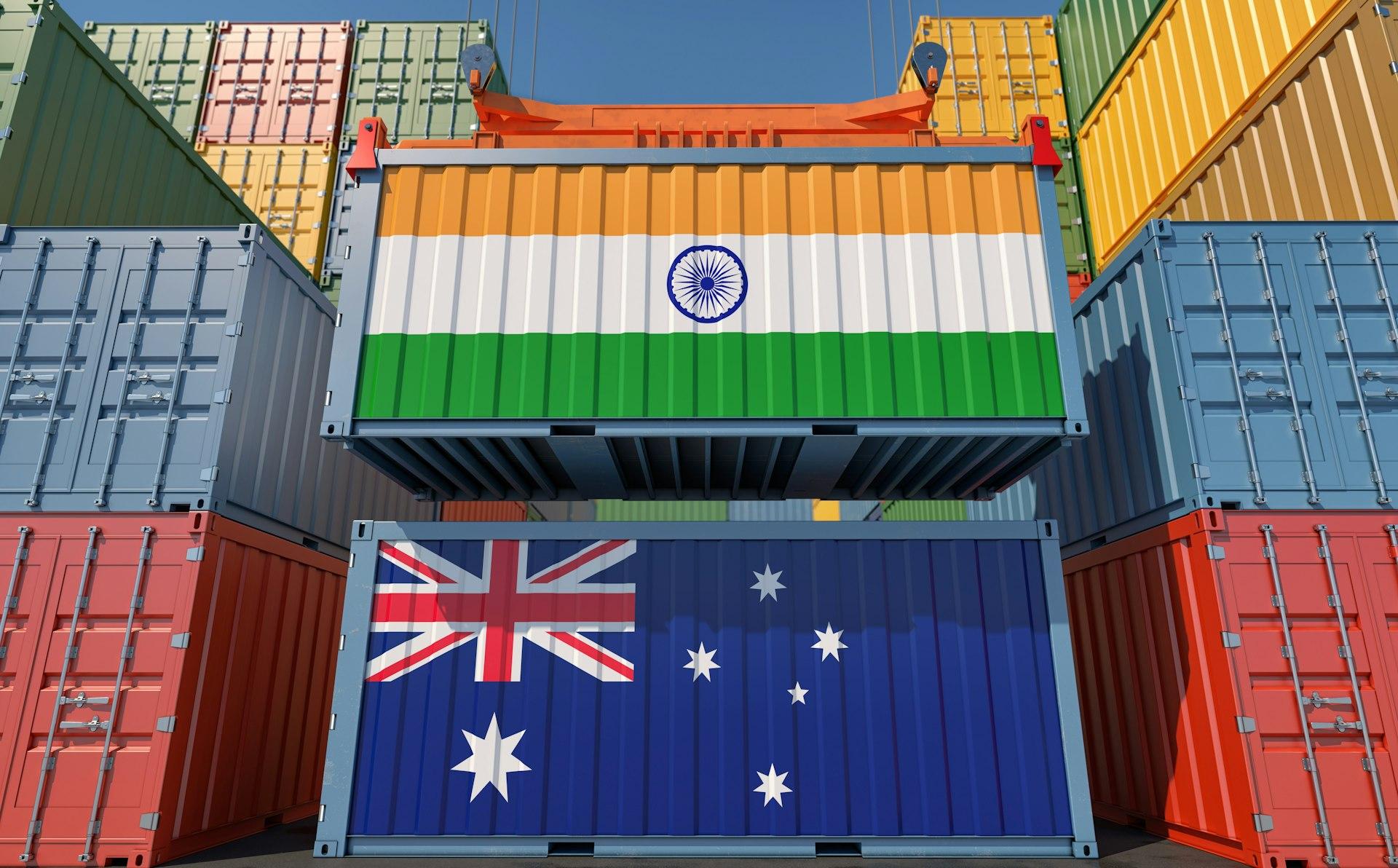
3. Key Indian Export Opportunities in Australia
Trade is not limited to Australian goods entering India. Australian importers can source a wide range of products from Indian manufacturers.
Textiles, Clothing and Household Products
India has a substantial textile and apparel manufacturing base. Products for Australian buyers may include garments, fabrics, home textiles and household linen. Retailers, wholesalers, online sellers and hospitality suppliers can assess manufacturers for product range, production capacity, quality systems, minimum order quantities and lead times.
DFAT identifies clothing and household linen among Indian goods on which Australian businesses and consumers have saved duties since ECTA began. Importers should still verify tariff classification, origin evidence, labelling and applicable Australian standards.
Pharmaceuticals and Chemicals
India’s pharmaceutical and chemical industries are also part of the bilateral trade relationship. India’s Ministry of Commerce and Industry reported growth in exports to Australia across pharmaceuticals and chemicals during the ECTA period. These goods can be subject to strict regulation. Importers should confirm product approvals, supplier credentials, safety documents, labelling, storage conditions and licensing before ordering. Tariff preferences do not replace regulatory approval.
Engineering, Automotive and Electrical Components
Indian suppliers also export engineering goods, automotive components and electrical products. These may interest Australian wholesalers, manufacturers, construction businesses and distributors. Buyers should compare technical specifications, materials, testing evidence, warranty terms, packaging and after-sales support. For machinery and electrical products, check applicable Australian safety and compliance rules before importation.
Agricultural and Processed Products
Indian agricultural and processed food products may suit ethnic grocery stores, food manufacturers and specialist distributors. Requirements vary between fresh produce, processed foods, plant products and animal-derived goods. Importers should verify Australian biosecurity, food safety, labelling and import conditions for the exact product.
4. How the Australia–India ECTA Supports Trade
The Australia–India Economic Cooperation and Trade Agreement entered into force on 29 December 2022. It reduces or eliminates tariffs on eligible goods and improves market access for some services suppliers. ECTA is an important foundation for trade, but benefits are product-specific.
DFAT states that more than 85 per cent of Australian goods exports to India by value were tariff-free from the agreement’s commencement, with a further five percentage points scheduled to be eliminated or reduced by full implementation in 2032. ECTA also reduces or phases out tariffs on selected agricultural and food products. India’s Ministry of Commerce and Industry reported in April 2026 that all Indian exports became eligible for zero-duty market access into Australia from 1 January 2026.
This does not mean every shipment automatically qualifies. Businesses must use the correct HS code, check the tariff schedule, meet rules of origin and provide required documents. Some products have tariff-rate quotas, staged reductions or other conditions.
Understanding Rules of Origin
Rules of origin determine whether a product qualifies as Australian or Indian under ECTA. Shipping a product through either country is not enough. Depending on the product, the rules may consider whether it was wholly obtained, how it was produced, whether its tariff classification changed, or the qualifying value content.
Certificate of Origin and Customs Documentation
A Certificate of Origin (COO) supports a claim for preferential tariff treatment when required. Exporters should work with an authorised issuing body and ensure the certificate matches the invoice, packing list and shipment details. Importers should coordinate with a customs broker or relevant customs authority before dispatch. DFAT’s ECTA guidance explains the origin and certification process, including record-keeping expectations.
5. Practical Steps for Importers and Exporters
Step 1: Research the Market and Identify Buyers
Confirm demand for the specific product. Identify likely importers, distributors, wholesalers, manufacturers or end users. Review their business activity, product range, purchasing requirements and ability to handle the intended volume. A country’s large population alone does not prove demand for a particular product.
Step 2: Confirm Product Specifications
Prepare a clear specification covering grade, size, material, ingredients, quality parameters, packaging, shelf life, labelling and inspection needs. Ask the buyer to approve it before production or dispatch. Both parties should use consistent product descriptions and HS classifications.
Step 3: Check Tariffs, HS Codes and Import Rules
Identify the correct Harmonized System code and check the current tariff treatment. Confirm whether ECTA applies, whether a quota or staged reduction exists, and what origin evidence is needed. Separately check food safety, biosecurity, product standards, licences and labelling. Use official guidance and a qualified customs professional for product-specific advice.
Step 4: Plan Shipping and Delivery
Compare sea and air freight based on product type, urgency, volume, temperature needs and total landed cost. Agree on Incoterms, insurance, export and import clearance responsibilities, delivery location and cost allocation. Perishable goods need careful temperature and transit planning.
Step 5: Verify the Supplier or Buyer
Check company registration, business address, references, trading history and communication details. For larger orders, consider third-party inspection, sample testing or factory verification. Use a written contract covering specifications, quantity, price, delivery dates, payment, inspection, claims and dispute resolution.
Step 6: Calculate the Full Landed Cost
Include freight, insurance, customs duties if applicable, taxes, port charges, inspection, storage, inland transport, financing and currency movements—not just the purchase price. Compare suppliers using the same product specification and delivery basis. A tariff reduction can improve competitiveness but does not automatically make a product the cheapest option.
Step 7: Start with a Manageable Trial Shipment
Where commercially practical, begin with a sample, trial order or smaller shipment before committing to a long-term volume agreement. Agree how the sample will be evaluated, who pays for testing and freight, and what happens if goods do not meet the approved specification. Record feedback on quality, packaging, customs clearance and delivery performance. A successful trial can provide a stronger basis for forecasting repeat orders and negotiating longer-term supply terms. It also helps both parties identify process gaps before the value and complexity of a shipment increase.
6. Challenges Businesses Should Prepare For in 2026
Businesses should plan for changing freight rates, transit schedules, currency movements and differences in product standards. Food and agricultural shipments may face additional checks, while industrial goods may require technical testing or compliance evidence. Delays, unclear specifications and incomplete documents can increase costs.
Competition is another consideration. Buyers may already have established suppliers, so a new exporter needs a clear value proposition. Consistent quality, transparent documentation, reliable communication, competitive landed cost and dependable delivery can matter more than a low quotation alone.
ECTA does not remove every trade barrier. It provides agreed tariff preferences and market-access commitments, but customs procedures, product regulations, licences and commercial risks still apply. Confirm requirements for the exact product and shipment date.
7. What to Watch in Australia–India Trade During 2026
Businesses should monitor the implementation of ECTA tariff schedules, including staged reductions and product-specific conditions. Australia and India are also negotiating a broader Comprehensive Economic Cooperation Agreement (CECA), intended to build on ECTA. According to the latest Australian Government information, negotiations are ongoing. A proposed CECA outcome should not be treated as an active tariff benefit until it is formally concluded and implemented.
Both governments have identified agriculture, critical minerals, health, critical technology and science as areas for deeper cooperation. These may create longer-term opportunities for suppliers, investors and service providers. Companies should monitor official announcements and assess each opportunity against their capabilities and compliance obligations.
8. How AUSExports Can Support Your Trade Enquiries
Businesses exploring Australian products for India need clear information about availability, specifications, supplier capability, documentation and shipment requirements. AUSExports welcomes enquiries from importers, wholesalers, distributors and business buyers interested in Australian export products.
When enquiring, share the product name, required grade or specification, estimated quantity, destination port, preferred delivery schedule and certification needs. This helps establish whether a product may suit your requirements and what further checks are needed. Confirm final pricing, availability, origin documents and import conditions before ordering.
Whether you are researching Australian food products, seafood, agricultural commodities or other export categories, careful planning and reliable communication are essential to a sustainable trading relationship.
Frequently Asked Questions
1. What was the value of Australia–India trade in 2025?
DFAT reports two-way trade in goods and services of AUD $50.2 billion in calendar year 2025. Figures can differ depending on the reporting period and whether they include goods only or goods and services.
2. What does Australia export to India?
Australian exports include agricultural products, grains, wool, meat, seafood, minerals, energy resources and services. ECTA offers preferential tariff treatment for eligible goods, subject to product-specific conditions.
3. What does India export to Australia?
Indian exports include textiles, clothing, household linen, pharmaceuticals, chemicals, agricultural products, engineering goods and other manufactured products. Importers should check standards, classification and regulatory requirements.
4. Does ECTA make all Australian exports duty-free in India?
No. ECTA provides tariff elimination or reductions for eligible products, with different staging periods and conditions. Some goods may be subject to quotas or specific origin rules.
5. Are Indian products duty-free in Australia in 2026?
India’s Ministry of Commerce and Industry stated in April 2026 that all Indian exports became eligible for zero-duty market access into Australia from 1 January 2026 under ECTA. Importers must still meet origin, documentation and non-tariff import requirements.
6. What documents are needed to claim ECTA benefits?
Depending on the product and shipment, businesses may need a Certificate of Origin and supporting origin records, plus commercial and transport documents such as an invoice, packing list and bill of lading or air waybill. Confirm exact requirements with the issuing body and customs broker.
7. How can an Indian importer find Australian suppliers?
Research suitable exporters and industry networks, then request specifications, samples, quotations and company details. Verify supplier credentials, product compliance, export capability and shipment terms before placing a large order.
Conclusion
Australia–India trade in 2026 offers opportunities across agriculture, food, seafood, wool, minerals, textiles, pharmaceuticals, chemicals and manufactured products. The AUD $50.2 billion two-way trade figure for 2025 and the growth in Australian agricultural exports demonstrate the scale of the relationship. ECTA has improved market access, while CECA negotiations may deepen the partnership in the future.
Success depends on more than finding a promising product. Importers and exporters should research demand, verify trading partners, confirm HS codes and origin rules, understand regulatory requirements, calculate landed costs and agree on clear shipment and payment terms. With careful preparation, businesses can explore sustainable opportunities in this important Asia-Pacific trade relationship.


