

 Grains & Pulses
 Organic Produce
 Spices & Condiments
 Fresh Herbs

 Fresh Fruits
 Fresh Vegetables
 Exotic Produce
 Seasonal Specials

 Groundnut Seeds
 Mustard Seeds
 Sesame Seeds
 Sunflower Seeds

 Fresh Fish
 Frozen Fish
 Crab & Lobster
 Prawns & Shrimps

 Bath & Body
 Skincare
 Haircare
 Oral Care

 Flavored Honey
 Honey Syrups
 Organic Honey
 Raw Honey

 Cornflakes
 Millet Mixes
 Oats & Muesli
 Granola

 Mini Tractors
 Harvesting Tools
 Power Tillers
 Sprayers & Pumps

 Chemical Fertilizers
 Pesticides
 Organic Fertilizers
 Herbicides

 Farm Tools
 Irrigation Equipment
 Threshers

 Packaging Machines
 Cold Storage Units
 Food Processing Machines
 Grinding & Milling Machines

 Baby Food
 Baby Skincare
 Diapers & Wipes
 Toys & Accessories

 Cattle Feed
 Fish Feed
 Pet Food
 Poultry Feed

 Frozen Chicken
 Ham & Bacon
 Meat Snacks
 Sausages

 Bakery Products
 Beverages (Juices, Soft Drinks)
 Packaged Snacks
 Ready-to-Eat Foods

 Biofuels
 Energy Storage Batteries
 Solar Panels
 Wind Energy Equipment


Top 10 Australian Products to Export to China: A Business Guide

Top Australian Products to Export to China: A Business Guide
China offers a large and diverse market for Australian products. Businesses exploring export opportunities can consider Australia’s established strengths in natural resources, agriculture and premium consumer goods.
Popular Australian Export Categories
- Minerals and resources: Iron ore and other mineral commodities are important components of Australia’s exports to China.
- Agricultural products: Barley, wheat, wool and other commodities offer opportunities, subject to market conditions and trade requirements.
- Food and beverages: Selected dairy products, seafood, meat, wine and premium food products may appeal to Chinese buyers where Australian Products to Export to China market access is available.
- Education services: Australian education providers attract international students, including students from China.
- Professional services: Selected Australian businesses may find opportunities in consulting, technology and other specialised services.
Important Considerations for Exporters
Before entering China, businesses should investigate customer demand, local competition, product labelling, customs documentation and applicable import approvals. Food and agricultural exports may face additional registration, inspection and quarantine requirements.
Businesses should also verify current tariffs and market-access conditions for their specific products.
Conclusion
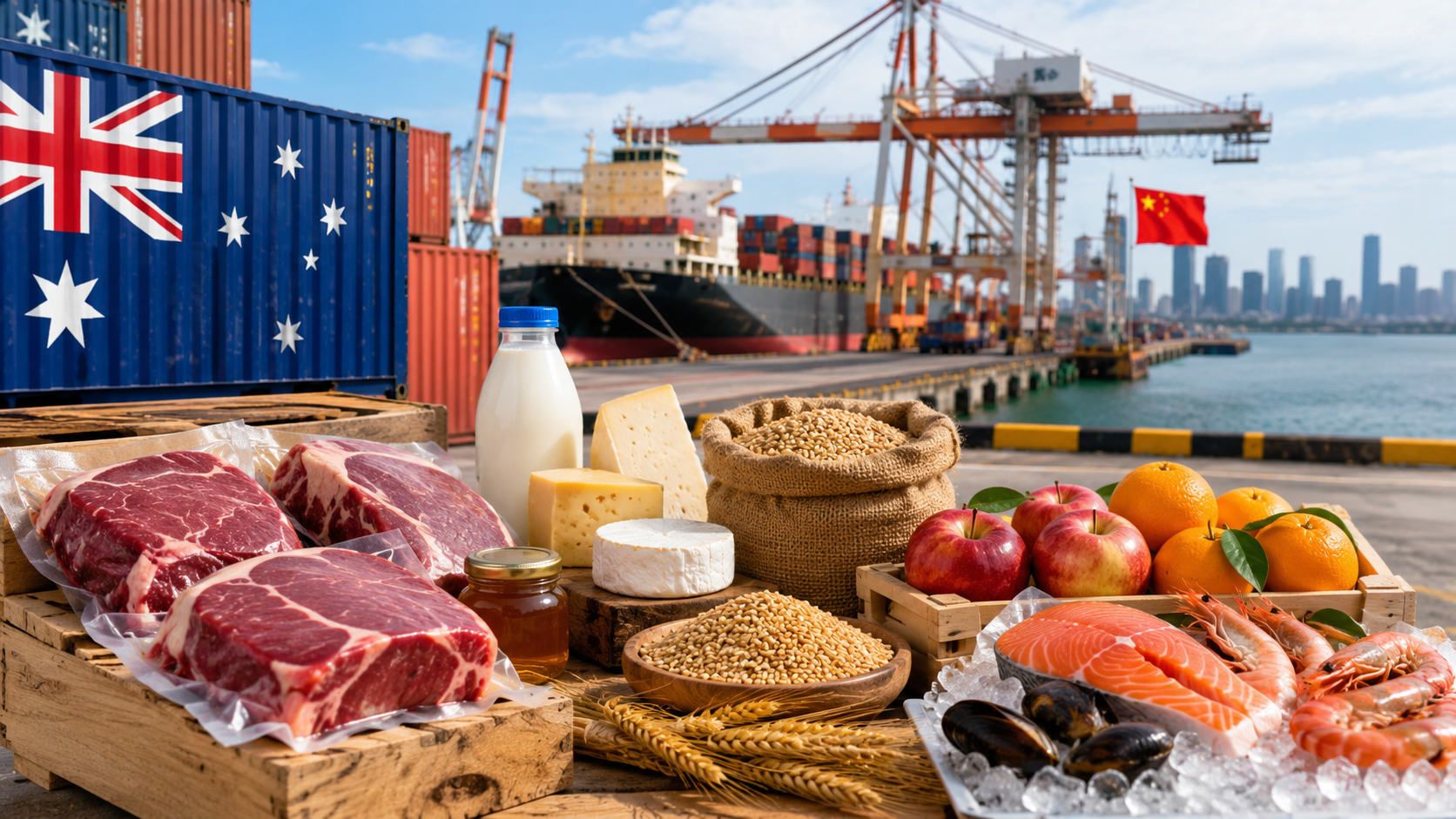
China presents a range of potential export opportunities for Australian companies. Understanding the target market and meeting regulatory requirements can help businesses develop reliable trading relationships and pursue sustainable export growth.
10 Best Australian Products to Export to China
1. Australian Beef and Meat Products
Australian beef is a major agricultural export category with established international demand. Premium beef cuts, frozen beef and other eligible meat products may offer opportunities for Chinese importers, wholesalers and food distributors.
Buyers should consider supplier approval, product specifications, cold-chain logistics and China’s current market access requirements before placing orders.
2. Australian Dairy Products
Australia has a well-developed dairy industry producing milk powder, cheese, butter, infant formula and other dairy products.
These products may attract interest from food manufacturers, supermarkets, distributors and wholesale importers. Product registration, labelling and applicable food safety requirements should be checked before exporting.
3. Australian Wine
Australian wine is recognised in international markets for its variety and production quality.
Red wine, white wine and premium bottled wine can be potential products for importers, retailers, hospitality businesses and wine distributors in China.
4. Australian Wheat and Grain Products
Australia produces a range of agricultural commodities, including wheat, barley and other grains.
These products can serve food manufacturers, milling companies, animal feed businesses and agricultural distributors. Exporters should confirm product specifications, phytosanitary conditions and applicable import requirements.
5. Australian Seafood
Australian seafood includes prawns, salmon, lobster, oysters and other marine products.
Quality handling, temperature-controlled transportation and appropriate health certification are important considerations when supplying international seafood buyers.
6. Australian Fresh Fruits
Australian fruit varieties such as apples, citrus fruits, cherries and grapes can offer opportunities in international fresh produce markets.
Importers should verify that the specific fruit and Australian production region have the necessary market access and satisfy China’s quarantine and phytosanitary conditions.
7. Australian Honey and Bee Products
Australian honey is valued by consumers who appreciate natural food products. Different varieties and packaging formats can appeal to retailers, food distributors and specialist buyers.
Exporters must check the relevant registration, certification, labelling and market access requirements for honey and other bee products.
8. Australian Wool
Australia is internationally recognised for its wool industry. Merino wool and other wool products are relevant to textile manufacturers, clothing producers and international raw material buyers.
This category can provide opportunities beyond food exports, particularly for businesses involved in textiles and manufacturing.
9. Australian Pulses and Agricultural Products
Pulses, oilseeds and other agricultural commodities may be relevant to food processing companies, animal feed manufacturers and commodity traders.
The suitability of each product depends on buyer demand, product quality, applicable customs classification and Chinese import conditions.
10. Australian Minerals and Natural Resources
Australia is a significant producer of mineral and resource commodities, including iron ore, gold and other important materials.
These products can be relevant to industrial buyers, manufacturers and international commodity trading companies.
Export Requirements for Australian Products to China
Before exporting Australian products to China, businesses should understand the applicable import regulations and documentation requirements.
Important considerations include:
1. Product Market Access
Not every Australian product automatically qualifies for export to China. Confirm that the specific commodity, production establishment and origin meet current Chinese import conditions.
2. Registration and Food Safety
Food manufacturers, processors and storage facilities may need registration through China’s China Import Food Enterprise Registration (CIFER) system.
3. Export Documentation
Depending on the product, shipments may require commercial invoices, packing lists, certificates of origin, health certificates, phytosanitary certificates and other supporting documentation.
4. Customs Duties and Tariffs
Eligible Australian products may benefit from the China–Australia Free Trade Agreement (ChAFTA). Businesses should check the applicable HS code, rules of origin and tariff conditions before calculating landed costs.
5. Shipping and Logistics
Selecting the right shipping method, packaging, storage conditions and transport arrangements is essential for maintaining product quality and meeting delivery requirements.
Always verify the latest requirements with the Australian Department of Agriculture, Fisheries and Forestry (DAFF), the relevant Chinese authorities and your licensed customs broker before shipping.
How to Find Reliable Australian Export Suppliers
Choosing a reliable Australian supplier is an important step in building a successful international trading relationship.
Before confirming a purchase, international buyers should:
- Check the supplier’s business identity and export experience.
- Request detailed product specifications and pricing.
- Verify relevant registrations, certifications and market access.
- Discuss minimum order quantities and available supply volumes.
- Confirm packaging, shipping terms and delivery schedules.
- Request samples or supporting quality documents where appropriate.
Working with an experienced export partner can help buyers understand sourcing options and coordinate the requirements of international trade.
Market Opportunities for Australian Product Brands in China
Australian Product Brands in China can explore opportunities across different consumer and commercial markets. Businesses should understand their target customers and identify what makes their products valuable.
For Australian Product Brands in China, a strong market identity can help communicate product quality, business values and brand reliability.
Building Consumer Confidence
Building trust is essential for Australian Product Brands in China. Clear product information, professional branding and consistent customer service can help businesses develop stronger relationships.
Companies introducing Australian Product Brands in China should focus on genuine product benefits rather than exaggerated marketing claims.
Future Growth Opportunities
The future of Australian Product Brands in China will depend on market understanding, customer satisfaction and consistent brand development. Businesses that monitor consumer preferences can identify new opportunities and improve their marketing strategies.
Developing Australian Product Brands in China requires a long-term approach that combines product value, brand recognition and effective communication.
What are the main Australian products exported to China?
Major Australian export categories include minerals, agricultural commodities, meat, dairy, seafood and other food products. Actual export eligibility varies by product.
Is Australian beef exported to China?
Australian beef is an established export category for China. However, the specific processing establishment and product must meet current Chinese market access and import requirements.
Do Australian food exporters need registration to export to China?
Certain overseas food manufacturers, processors and storage facilities must register with China’s GACC through the CIFER system. Requirements depend on the product category and applicable regulations.
Does ChAFTA reduce import duties in China?
ChAFTA provides preferential tariff arrangements for eligible Australian-origin products. Importers should check the relevant HS code and rules of origin to confirm the applicable tariff.
How can Chinese businesses find Australian suppliers?
Buyers can research Australian exporters, request quotations, verify supplier credentials and work with experienced international trade partners to identify suitable products and sourcing arrangements.
Conclusion
Australia offers a diverse range of products with potential opportunities in the Chinese market. From premium beef and dairy to grains, seafood, honey, wool and minerals, Australian suppliers can serve different industries and buyer requirements.
However, successful exports require careful product selection, reliable suppliers, appropriate documentation and compliance with current Chinese import regulations.
Whether you are an importer, wholesaler, distributor or international buyer, building relationships with reliable Australian export partners is an important step towards successful international trade.
Looking for Australian Products for Your Business?
Are you interested in sourcing quality Australian products for the Chinese market? Contact our team to discuss your product requirements, sourcing opportunities and potential export partnerships.
11. Choose the Right Market Entry Strategy
Entering the Chinese market requires a suitable business strategy. Australian exporters should consider how they want to introduce their products and develop their commercial presence. Different entry approaches offer different levels of control, investment and business responsibility.
Some companies choose to work with established distributors that already understand their target industries. Others prefer to develop direct relationships with retailers, wholesalers or business customers. The right approach depends on the company’s resources, product category, long-term objectives and experience in international trade.
Before selecting a market entry model, businesses should compare potential costs, commercial responsibilities and expected benefits. A clearly defined strategy can help avoid unnecessary expenses and support more organised business development.
12. Develop Relationships with Local Business Partners
Strong commercial relationships can make entering a new market more manageable. Australian exporters may benefit from working with local distributors, sourcing specialists, retail partners, business consultants and industry representatives.
A suitable partner can provide valuable knowledge about customer expectations, commercial practices and industry developments. They may also help introduce products to relevant business networks and identify potential growth opportunities.
However, selecting a partner requires careful evaluation. Businesses should review professional experience, reputation, industry knowledge and previous commercial relationships before making agreements.
Both parties should understand their responsibilities, business objectives and expectations from the beginning. Clear agreements can reduce misunderstandings and create a stronger foundation for long-term cooperation.
13. Develop a Competitive Pricing Strategy
Pricing is an important part of international brand positioning. Australian exporters need to understand how their products compare with competing brands and what customers expect to receive at different price levels.
A competitive price does not always mean offering the cheapest product. Businesses targeting premium customers may achieve better results by communicating product value, distinctive features and quality standards.
Companies should consider production costs, operating expenses, distributor margins, marketing expenditure and other commercial costs when setting prices. They should also review how currency movements and changing market conditions may affect profitability.
Comparing different pricing models can help exporters identify a suitable position in the market. A well-planned pricing strategy should support both customer expectations and the business’s financial objectives.
14. Protect Your Brand and Intellectual Property
Protecting intellectual property is an important consideration when expanding internationally. A company’s brand name, logo, packaging design, product identity and original creative materials may represent significant business value.
Australian exporters should consider appropriate trademark protection before investing heavily in marketing or entering commercial agreements. Registration in Australia does not automatically provide trademark protection in China.
Businesses should investigate relevant intellectual property registration procedures and seek professional advice about protecting their brand in the Chinese market.
They should also establish clear agreements with distributors, manufacturers and marketing partners regarding the permitted use of their brand assets. Keeping records of ownership and authorised use can help reduce potential disputes.
Taking these precautions at an early stage can support brand development and protect the company’s long-term commercial interests.
15. Explore Different Sales and Distribution Channels
Different products may require different sales channels. Some Australian brands may find opportunities through specialised retailers, while others may target wholesalers, corporate buyers or established online marketplaces.
Businesses should identify where their potential customers prefer to purchase products. They can then assess which sales channels are most suitable for their products and commercial objectives.
An effective distribution strategy should also consider product availability, sales responsibilities, customer reach and relationships between different channel partners.
For example, a business may begin by working with a specialised distributor before exploring additional retail opportunities. Another company may focus on business-to-business partnerships because its products are designed for commercial customers.
Selecting appropriate channels can help Australian exporters reach relevant audiences without spreading their resources too widely.
16. Participate in Industry Events and Business Exhibitions
Industry exhibitions, business conferences and trade events can provide valuable opportunities for Australian exporters to introduce their companies to potential commercial partners.
These events allow businesses to demonstrate product features, discuss industry developments and establish direct contact with buyers and distributors.
A well-prepared exhibition strategy should include clear product information, professional presentation materials and specific business objectives. Companies should identify the types of visitors they want to meet and prepare relevant questions before attending.
Following up with interested contacts after an event is equally important. Businesses can organise meetings, provide additional product information and continue discussions about possible commercial cooperation.
Participating in relevant industry events can help exporters develop professional networks and better understand opportunities within their target sectors.
17. Build a Localised Customer Experience
A positive customer experience involves more than the quality of a product. Customers may also evaluate how easily they can access product information, communicate with a business and receive assistance after purchasing.
Australian exporters entering China should consider how their customer experience can meet local expectations. This may involve offering suitable language support, providing clear product instructions and ensuring that customer enquiries are handled professionally.
Businesses selling through retail partners should also discuss service standards and communication procedures with those partners.
Consistency is important. Customers should receive accurate information and a reliable experience regardless of where they discover or purchase the product.
Investing in customer experience can help businesses develop stronger commercial relationships and improve their reputation over time.
18. Measure Business Performance and Improve Your Strategy
Australian exporters should regularly evaluate whether their China market strategy is achieving its objectives. Measuring business performance helps companies understand which activities are producing meaningful results and where improvements may be necessary.
Useful performance indicators may include:
- Number of qualified business enquiries.
- Growth in distributor and retail partnerships.
- Sales performance across different product categories.
- Website visits from relevant target markets.
- Customer engagement with marketing campaigns.
- Repeat orders from existing business customers.
- Changes in customer feedback and product demand.
These indicators can provide valuable insights into business performance. However, companies should focus on meaningful results rather than relying only on website traffic or social media engagement.
Regular performance reviews allow businesses to adjust their marketing activities, improve their commercial approach and make better-informed decisions about future investment.
19. Prepare for Long-Term Market Development
Building a successful presence in China should be treated as a long-term business objective rather than a short-term promotional campaign.
Australian companies need to remain adaptable as customer preferences, industry conditions and competitive activities change. They should regularly review their business objectives and identify opportunities to strengthen their market position.
Developing relationships with reliable partners, maintaining consistent brand standards and investing in market knowledge can support sustainable growth.
Businesses should also consider whether successful products can be expanded into related customer segments or additional regional markets. Such decisions should be based on market research and realistic business assessments.
A flexible approach allows exporters to respond to changing opportunities while maintaining a clear direction for their international operations.
Conclusion: Creating Sustainable Opportunities for Australian Brands
Expanding into China involves a combination of strategic planning, commercial relationships, effective branding and continuous market development. Australian exporters that understand these business elements can create stronger foundations for international growth.
From choosing an appropriate entry strategy to protecting intellectual property and measuring commercial performance, every decision can influence long-term success.
By taking a structured and customer-focused approach, Australian businesses can explore new opportunities, strengthen their commercial networks and build recognisable brands in the Chinese marketplace.


