

 Grains & Pulses
 Organic Produce
 Spices & Condiments
 Fresh Herbs

 Fresh Fruits
 Fresh Vegetables
 Exotic Produce
 Seasonal Specials

 Groundnut Seeds
 Mustard Seeds
 Sesame Seeds
 Sunflower Seeds

 Fresh Fish
 Frozen Fish
 Crab & Lobster
 Prawns & Shrimps

 Bath & Body
 Skincare
 Haircare
 Oral Care

 Flavored Honey
 Honey Syrups
 Organic Honey
 Raw Honey

 Cornflakes
 Millet Mixes
 Oats & Muesli
 Granola

 Mini Tractors
 Harvesting Tools
 Power Tillers
 Sprayers & Pumps

 Chemical Fertilizers
 Pesticides
 Organic Fertilizers
 Herbicides

 Farm Tools
 Irrigation Equipment
 Threshers

 Packaging Machines
 Cold Storage Units
 Food Processing Machines
 Grinding & Milling Machines

 Baby Food
 Baby Skincare
 Diapers & Wipes
 Toys & Accessories

 Cattle Feed
 Fish Feed
 Pet Food
 Poultry Feed

 Frozen Chicken
 Ham & Bacon
 Meat Snacks
 Sausages

 Bakery Products
 Beverages (Juices, Soft Drinks)
 Packaged Snacks
 Ready-to-Eat Foods

 Biofuels
 Energy Storage Batteries
 Solar Panels
 Wind Energy Equipment



Top 10 Australian Products in Demand Overseas


Top 10 Australian Products in Demand Overseas: A Guide to Global Export Opportunities
Introduction
Australia is widely recognised for producing high-quality goods that attract buyers from different parts of the world. From premium agricultural products and natural resources to food, beverages, skincare and healthcare products, the country offers a diverse range of export opportunities.
The demand for Australian products in demand overseas continues to create opportunities for international importers, wholesalers, retailers and distributors. Australian products are often associated with quality standards, product safety, reliability and strong production practices.
International buyers are increasingly interested in sourcing products from Australia because of its established industries, agricultural resources and reputation in global trade. Countries across Asia, Europe, North America and the Middle East import a variety of Australian goods to meet consumer and industrial requirements.
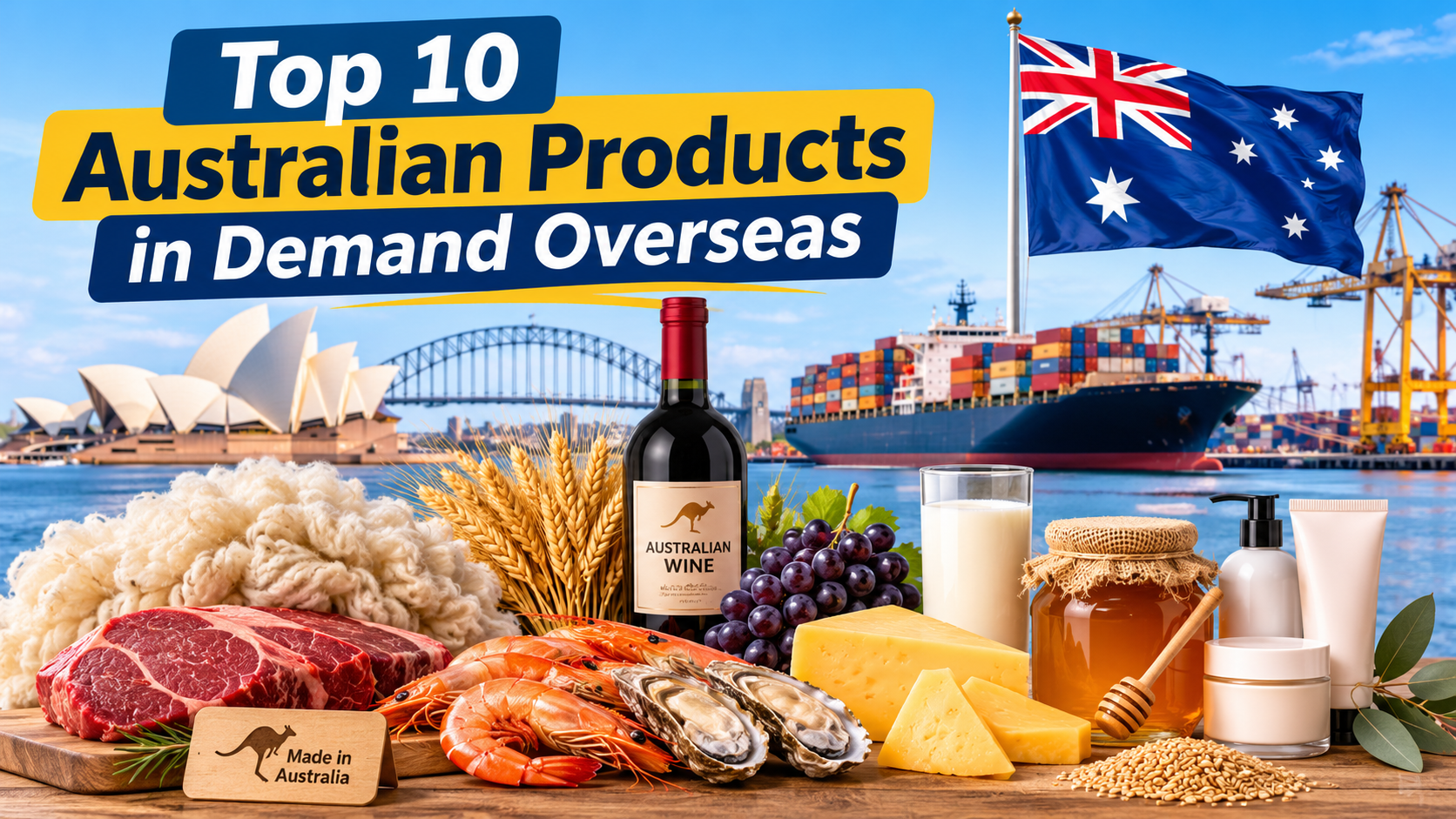
Whether you are an importer looking for reliable suppliers, a wholesaler exploring new product categories or a business interested in international trade, understanding Australia’s leading export products can help you identify potential opportunities.
In this article, we explore the top 10 Australian products in demand worldwide and explain why international markets continue to value them.
1. Australian Iron Ore and Minerals
Australia is one of the world’s major producers and exporters of mineral resources. Iron ore is particularly important to the Australian economy and plays a significant role in international industrial supply chains.
Iron ore is a key raw material used in steel manufacturing. It supports industries such as construction, infrastructure development, automotive manufacturing and heavy engineering.
Major international markets for Australian iron ore include China, Japan, South Korea and other industrial economies.
Why Is Australian Iron Ore in Demand?
- Established mining and processing industries.
- Large mineral resource deposits.
- Internationally competitive supply chains.
- Strong demand from steel manufacturing industries.
- Established relationships with global buyers.
Apart from iron ore, Australia also exports coal, gold, copper, lithium and other mineral resources. Lithium is particularly important because it is used in rechargeable batteries for electric vehicles and energy storage systems.
For international buyers, Australian mineral resources represent an important sourcing opportunity in the global industrial market.
2. Australian Beef and Lamb
Australian beef and lamb are among the country’s well-known agricultural exports. Australia’s livestock industry has developed a strong international reputation for producing quality meat products.
The country’s large agricultural regions, established livestock production systems and food safety requirements contribute to its position in the global meat market.
Australian beef is supplied to restaurants, supermarkets, food distributors and hospitality businesses around the world.
Why Do International Buyers Prefer Australian Meat?
- Recognised product quality.
- Established meat processing facilities.
- Different product specifications for international markets.
- Strong food safety and export requirements.
- Availability of chilled and frozen product options.
Major markets for Australian beef and lamb include countries in Asia, the Middle East and North America.
Importers should consider product specifications, halal certification where required, cold-chain logistics and destination-country import regulations before purchasing.
Australian meat products offer opportunities for distributors and food businesses looking for established international suppliers.
3. Australian Wool
Modern Merino: wool grown alongside native flora and fauna
Australia is internationally recognised for its high-quality wool industry, particularly Merino wool. Australian wool is widely used in the production of clothing, suits, knitwear, blankets, carpets and premium textile products.
Merino wool is valued for its softness, breathability, insulation and versatility. These qualities make it attractive to clothing manufacturers and textile businesses.
What Makes Australian Wool Special?
Australian Merino wool is popular because of its:
- Soft and comfortable fibre.
- Natural temperature-regulating properties.
- Breathability and moisture management.
- Suitability for premium textile manufacturing.
- Versatility across different clothing products.
China is a major destination for Australian wool, while other textile-producing countries also source Australian wool for manufacturing.
For international wholesalers and textile manufacturers, Australian wool can be an attractive sourcing option, particularly in the premium clothing and textile segments.
4. Australian Wheat and Grains
Australia’s Agriculture Hits Historic Export Milestone – Tradelink International
Australia has a well-established grain industry, with wheat being one of its most important agricultural export products. Australian wheat is supplied to international markets for flour production, bread manufacturing, noodles, animal feed and other food applications.
The country’s agricultural regions benefit from large-scale farming operations and established grain handling and transportation networks.
Why Is Australian Wheat Popular Worldwide?
- Suitable for different food manufacturing applications.
- Established grain production and export infrastructure.
- Different wheat varieties for different processing needs.
- Reliable supply relationships with international markets.
- Strong agricultural export experience.
Australian wheat is exported to several international destinations, particularly in Asia and the Middle East.
In addition to wheat, Australia produces and exports barley, canola, oats and other grains. These products support food manufacturing, livestock production and agricultural industries worldwide.
International grain buyers should evaluate protein content, moisture levels, grain quality specifications and shipping requirements before placing orders.
5. Australian Wine
St Hallett Blackwell Shiraz – Iconic Barossa Valley Red – COVE 27
Australia has a well-known wine industry supported by established vineyards, winemakers and regional wine-producing areas.
Australian wine is available in different varieties and styles, including Shiraz, Cabernet Sauvignon, Chardonnay and Sauvignon Blanc.
Regions such as Barossa Valley, Margaret River, McLaren Vale and Hunter Valley are recognised for their wine production.
Why Do Global Consumers Choose Australian Wine?
- Distinctive regional wine varieties.
- Established wine production expertise.
- Different price and quality segments.
- Recognised Australian wine regions.
- Availability of products for retail and hospitality markets.
Australian wine is sold in international markets across Asia, Europe and North America.
Importers, distributors and hospitality businesses may find opportunities in sourcing Australian wines for their customers.
However, alcohol import regulations, licensing, labelling and local taxation must be considered before entering this product category.
6. Australian Seafood
Premium Seafood Feast Box | Lobster, Prawns & Oysters – Getfish Seafood
Australia’s seafood industry supplies a wide variety of products to domestic and international markets. Its coastal environment supports commercial fishing and aquaculture activities.
Australian seafood products include prawns, lobster, oysters, abalone, tuna, salmon and different varieties of fish.
These products are supplied to restaurants, supermarkets, seafood distributors and food service businesses.
What Makes Australian Seafood Attractive?
- Diverse seafood varieties.
- Established commercial fishing and aquaculture sectors.
- Different fresh, chilled and frozen product options.
- Demand from premium food service markets.
- Export supply chains designed for international distribution.
Asian markets are important destinations for several Australian seafood products.
Seafood importers should pay particular attention to temperature-controlled transportation, product traceability, health certification and destination-country food safety requirements.
For international food distributors, Australian seafood can provide opportunities in both premium retail and hospitality markets.
7. Australian Dairy Products
Gippsland Jersey – GippslandJersey
Australia has a developed dairy industry that produces milk, cheese, butter, cream, yoghurt and milk powder.
Australian dairy products are used in households, restaurants, bakeries, food processing facilities and commercial food manufacturing.
Milk powder is particularly important for international trade because it can be stored and transported more easily than fresh milk when handled according to the required specifications.
Why Are Australian Dairy Products in Demand?
- Established dairy production industry.
- Wide variety of dairy product categories.
- Products for retail and industrial applications.
- Established food manufacturing capabilities.
- International distribution experience.
Australia exports different dairy products to markets across Asia and other regions.
Importers should check ingredient information, shelf life, storage requirements, dairy certifications and local food import regulations.
Businesses supplying supermarkets, restaurants and food manufacturers may find opportunities in Australian dairy products.
8. Australian Skincare and Cosmetics
RUWI Skincare at The Moonta Collective | Indigenous Australian Botanicals | Yorke Peninsula
Australian skincare and cosmetic products have attracted attention from international consumers interested in beauty, personal care and botanical ingredients.
Australian brands offer a variety of products, including moisturisers, facial cleansers, sunscreens, body lotions, serums and natural skincare products.
Some Australian skincare products use ingredients such as tea tree oil, eucalyptus, botanical extracts and native Australian plant ingredients.
Why Are Australian Skincare Products Attractive?
- Growing interest in personal care products.
- Different product formulations and categories.
- Opportunities in premium skincare markets.
- Demand for botanical and specialised ingredients.
- Opportunities for private-label and retail distribution, depending on supplier arrangements.
International buyers can explore Australian skincare products for beauty stores, online marketplaces, pharmacies and specialist retailers.
However, importers should verify product ingredients, cosmetic registration requirements, product claims, labelling and safety regulations in their destination countries.
A reliable supplier with appropriate product documentation can help businesses develop long-term international distribution relationships.
9. Australian Processed Foods and Packaged Products
Arnott’s to meet 2025 Targets two years early – PKN Packaging News
Australia has a diverse food manufacturing industry that produces packaged and processed food products for local and international consumers.
Some popular product categories include biscuits, breakfast cereals, confectionery, packaged snacks, sauces, honey and other shelf-stable foods.
These products are suitable for different retail channels, including supermarkets, convenience stores, speciality food shops and online marketplaces.
Why Do International Buyers Consider Australian Packaged Foods?
- Wide product variety.
- Established food manufacturing facilities.
- Different packaging and product sizes.
- Opportunities for retail and wholesale distribution.
- Products suitable for different consumer markets.
Australian packaged foods can appeal to consumers who are interested in trying international food brands and products.
For importers, choosing products requires careful consideration of market demand, product shelf life, packaging, ingredient requirements and shipping costs.
Businesses should also check food labelling, allergen declarations and import permissions before placing commercial orders.
10. Australian Healthcare and Pharmaceutical Products
Australia has established healthcare, medical technology and pharmaceutical industries. These sectors produce a range of products for healthcare providers, distributors and international markets.
Australian healthcare-related exports include medical devices, diagnostic equipment, specialised healthcare products and certain pharmaceutical products.
International demand for healthcare products is influenced by healthcare infrastructure development, medical technology improvements and the need for reliable medical supplies.
Why Are Australian Healthcare Products Important?
- Established healthcare and research sectors.
- Product development and manufacturing capabilities.
- Opportunities in medical technology.
- Demand from hospitals and healthcare distributors.
- Potential for international business partnerships.
International importers interested in Australian healthcare products should verify manufacturing standards, product registrations, medical device approvals and pharmaceutical import regulations.
This category can offer opportunities for specialised distributors with the appropriate regulatory knowledge and market access.
Why Are Australian Products Popular in International Markets?
Australia’s export industries benefit from a combination of natural resources, agricultural production, established manufacturing capabilities and international trade relationships.
Several factors contribute to the demand for Australian products overseas.
1. Quality and Product Standards
International buyers often evaluate suppliers based on product quality, safety, consistency and documentation. Australian producers operate under various industry and regulatory requirements that help establish confidence in their products.
2. Diverse Product Categories
Australia exports products across many industries, including agriculture, mining, food processing, healthcare and personal care.
This diversity provides international importers with multiple sourcing opportunities.
3. Established Export Infrastructure
Australia has developed ports, freight networks, logistics services and export-related business infrastructure to support international trade.
4. Global Trade Relationships
Australia maintains trade relationships with numerous countries and participates in international trade agreements. These relationships can create opportunities for eligible products to access overseas markets under applicable trade conditions.
5. Growing International Demand
Population growth, industrial development, changing consumer preferences and demand for specialised products can influence international sourcing decisions.
However, demand varies by country and product category. Importers should always research their target market before purchasing.
Major Export Markets for Australian Products
DP World Australia terminals integrate Portchain Connect – Port Technology International
Australian products reach buyers in many international markets. Different countries import different product categories depending on their industrial requirements, consumer preferences and trade relationships.
Some important markets include:
- China: A major destination for Australian minerals, agricultural commodities and other goods.
- Japan: Imports Australian agricultural products, minerals, food and other resources.
- South Korea: An important market for Australian resources, agricultural products and food.
- India: Offers opportunities for Australian resources, agricultural products and selected consumer goods.
- United States: A market for Australian agricultural products, wine, food and specialised goods.
- United Kingdom: Imports a range of Australian food, wine and other products.
- United Arab Emirates: Offers opportunities for Australian food, agricultural products and other imported goods.
The best export market depends on the product, pricing, competition, logistics and applicable import regulations.
How to Source Australian Products for International Business
If you are an importer, wholesaler, distributor or retailer, finding reliable Australian suppliers is an important step in developing an international sourcing business.
Here are some practical steps to consider.
1. Identify Your Target Product
Start by choosing the product category you want to import. Research its demand, competitors, target customers and expected selling price in your local market.
2. Find Reliable Australian Suppliers
Look for established manufacturers, exporters, wholesalers and authorised distributors.
Review their business credentials, product catalogues, certifications and export experience.
3. Request Product Information
Before purchasing, request:
- Product specifications.
- Wholesale price lists.
- Minimum order quantities.
- Product samples, where available.
- Packaging information.
- Relevant certificates and documentation.
4. Check Export and Import Requirements
Different products have different export and import requirements. Food, agricultural goods, cosmetics, minerals and healthcare products may require specialised documentation or approvals.
Always confirm the applicable requirements with the relevant authorities.
5. Compare Shipping and Logistics Costs
International shipping costs can significantly affect your total purchasing cost.
Consider freight charges, insurance, customs duties, taxes, storage and delivery times before confirming an order.
6. Build Long-Term Supplier Relationships
Working with reliable suppliers can help businesses maintain consistent product quality, negotiate better commercial terms and develop stable supply chains.
Challenges to Consider When Importing Australian Products
Although Australian export products offer many opportunities, international buyers should also understand the challenges involved.
Shipping Costs: International transportation can increase the final product cost, especially for heavy, refrigerated or time-sensitive goods.
Import Regulations: Every destination country has specific customs, product safety and documentation requirements.
Currency Fluctuations: Changes in exchange rates can affect purchasing costs and profit margins.
Supplier Verification: Importers should verify supplier credentials and business information before making payments.
Market Competition: Popular products may face competition from suppliers in other countries.
Understanding these challenges can help businesses make better sourcing decisions and reduce unnecessary risks.
Future Opportunities for Australian Export Products
The future of Australian exports includes opportunities across traditional industries and emerging product categories.
Several sectors may attract continued international interest.
- Critical Minerals: Demand for lithium and other minerals is linked to battery manufacturing and energy transition technologies.
- Premium Food Products: International consumers continue to explore different food products and speciality ingredients.
- Sustainable Agriculture: Interest in responsible production and traceability may influence agricultural purchasing decisions.
- Natural Skincare: Beauty and personal care markets offer opportunities for distinctive Australian products.
- Medical Technology: Healthcare innovation creates potential opportunities for specialised products and equipment.
Businesses interested in international sourcing should monitor changing market conditions and identify products that match their customers’ requirements.
Conclusion
Australia offers a diverse range of products for international buyers, including iron ore, beef, lamb, wool, wheat, wine, seafood, dairy products, skincare and healthcare products.
The growing interest in Australian Products in Demand overseas creates opportunities for importers, wholesalers, retailers and international distributors.
However, successful international sourcing requires more than simply identifying popular products. Businesses must evaluate supplier reliability, product quality, pricing, shipping costs, import regulations and market demand.
Whether you are starting an import business or expanding an existing distribution network, Australian suppliers can provide access to a wide range of products across different industries.
At AusExPorts, exploring Australian export opportunities can be a valuable starting point for businesses looking to connect with Australian products and suppliers.
Frequently Asked Questions (FAQs)
1. What are the most popular Australian products in demand overseas?
Some popular Australian export products include iron ore, beef, lamb, wool, wheat, wine, seafood, dairy products, skincare and healthcare products.
2. Which Australian products are best for international importers?
The best products depend on the target market, customer demand, import regulations, shipping costs and available suppliers. Food products, agricultural commodities, minerals and skincare are some categories worth researching.
3. Which countries import Australian products?
China, Japan, South Korea, India, the United States, the United Kingdom and the United Arab Emirates are among the important destinations for different Australian export products.
4. Why are Australian products popular worldwide?
Australian products benefit from established production industries, quality standards, diverse product categories and international trade relationships.
5. How can I find Australian product suppliers?
You can research Australian manufacturers, exporters, wholesalers, industry directories and trade platforms. Always verify supplier credentials before placing an order.
6. Is Australian food exported internationally?
Yes. Australia exports various food products, including beef, lamb, wheat, dairy products, seafood, wine and processed foods.
7. Are Australian skincare products available for international buyers?
Yes. Many Australian skincare brands and manufacturers serve international markets. Buyers should check product availability, supplier arrangements and destination-country cosmetic regulations.
8. What should I check before importing Australian products?
Check supplier credentials, product specifications, wholesale prices, minimum order quantities, shipping costs, customs requirements and necessary certifications.


